
How to Define SEO's Role Across Marketing Channels
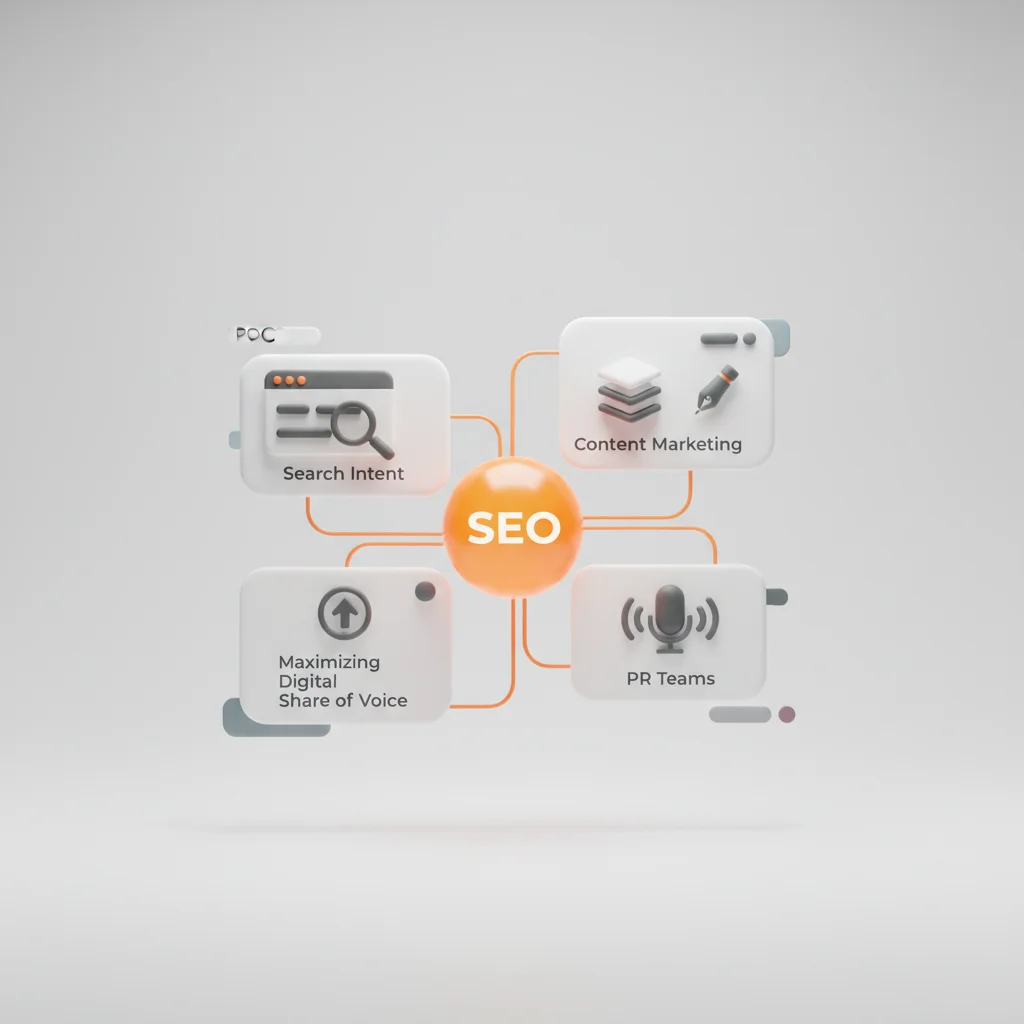
SEO drives cross-channel marketing synergy by supplying search intent data to PPC, content marketing, and PR teams, maximizing overall digital share of voice.
ON THIS PAGE
0% read
- Defining SEO's Role in Cross-Channel Marketing Synergy
- The Modern Reality: Why SEO Cannot Exist in a Silo
- How SEO Powers Paid Search (PPC) and Performance Marketing
- Bridging the Gap Between SEO and Content Marketing
- The Strategic Intersection of SEO and Digital PR
- Aligning SEO with Social Media and Influencer Marketing
- How to Measure SEO's Contribution Across Channels
SEO drives cross-channel marketing synergy by supplying search intent data to PPC, content marketing, and PR teams, maximizing overall digital share of voice.
Understanding how to define SEO's role across marketing channels has transitioned from a tactical traffic-generation task to a foundational business strategy. Rather than functioning as an isolated performance silo, organic search operates as an enterprise-grade customer intelligence engine that informs audience demand, guides commercial messaging, and refines resource allocation across the entire marketing ecosystem. Decision-makers and growth leaders must systematically integrate organic search intelligence into performance marketing, brand communication, and product positioning. This strategic blueprint examines the organizational frameworks, technical handshakes, attribution models, and execution workflows necessary to establish search optimization as the central operational backbone of a unified digital marketing engine.
Defining SEO's Role in Cross-Channel Marketing Synergy
Modern search engine optimization has evolved beyond keyword rankings and mechanical link acquisition. At an executive level, SEO functions as an empirical mirror of real-time market demand, customer psychology, and competitive movement. When an organization redefines SEO from a standalone acquisition channel into a cross-functional intelligence layer, every downstream channel gains precision, operational efficiency, and reduced cost per acquisition.
Understanding the Core Principle of SEO Synergy
Marketing channels historically operate under disparate operational incentives. Paid media teams prioritize immediate conversion velocity and short-term return on ad spend (ROAS). Public relations professionals focus on brand sentiment, tier-one editorial placements, and media reach. Content marketing teams produce brand narratives and educational thought leadership. Without a unifying data layer, these initiatives frequently pull in diverging directions, resulting in fragmented messaging, redundant production costs, and severe cannibalization.
Cross-channel marketing synergy occurs when search intent intelligence serves as the shared strategic compass. Organic search captures active, unprompted consumer demand at the exact moment of intent. By decomposing search engine results pages (SERPs), semantic entities, and conversational queries, SEO reveals what potential buyers need, the language they use to articulate their friction points, and the formats they prefer for evaluation. When paid search, social media, and digital PR consume these organic insights, campaigns cease to rely on static customer personas and instead align with verifiable search behavior.
Cross-functional alignment eliminates organizational friction by establishing shared taxonomy and customer journey milestones. When the search team identifies emerging informational trends, the content team crafts authoritative assets, the paid search team launches target testing on high-intent variants, and the digital PR team packages the underlying trend data into industry studies. The cumulative impact produces a market presence where the brand dominates both paid and organic positions across every stage of the funnel.
Why Search Intent Data is the New Gold
Third-party cookie deprecation, privacy regulations such as GDPR and CCPA, and algorithmic tracking limitations have constrained legacy behavioral targeting. In this privacy-centric landscape, search intent data represents the most resilient, privacy-compliant primary source of commercial intent. A search query is an explicit declaration of a specific problem, informational gap, or transactional readiness.
Analyzing aggregated search query logs, Search Console performance data, and conversational query structures enables organizations to extract several layers of business intelligence:
Linguistic Precision: Discovering the precise operational language, acronyms, and terminology prospects use when evaluating software, services, or physical products.
Friction Identification: Isolating high-volume comparison queries (e.g., "alternative to," "pros and cons," "pricing models") to uncover unaddressed objections in the sales pipeline.
Emerging Market Vectors: Detecting early spikes in topical interest before third-party industry reports publish market shifts, allowing first-mover content and paid campaign creation.
Entity Relationships: Understanding how search engines and large language models (LLMs) connect your brand entity with specific attributes, competitors, and solution categories.
                      ┌────────────────────────────────────────┐
                      │        Search Intent Data Core         │
                      │  (Search Console, Query Logs, SERPs)   │
                      └───────────────────┬────────────────────┘
                                          │
         ┌────────────────────────────────┼────────────────────────────────┐
         │                                │                                │
         ▼                                ▼                                ▼
┌──────────────────┐            ┌───────────────────┐            ┌───────────────────┐
│   Paid Search    │            │ Content Marketing │            │    Digital PR     │
│   • Negative KWs │            │ • Intent Mapping  │            │ • Media Pitches   │
│   • High-CTR Copy│            │ • Topic Clusters  │            │ • Entity Authority│
│   • Bid Balance  │            │ • Format Alignment│            │ • Reactive Trends │
└──────────────────┘            └───────────────────┘            └───────────────────┘
Treating search data strictly as a ranking mechanism forfeits its primary business value. When fed into enterprise business intelligence dashboards, search intent informs product roadmaps, customer success documentation, sales enablement battlecards, and go-to-market messaging frameworks.
Maximizing Digital Share of Voice with SEO Insights
Digital Share of Voice (SOV) measures a brand's total visibility across the competitive landscape relative to total market demand. Historically, SOV calculations remained restricted to paid media impression share or broadcast PR reach. In modern omnichannel search environments, digital share of voice spans standard organic SERP real estate, paid ad placements, local map packs, AI Overviews, generative summaries, and third-party review platforms.
To maximize digital SOV, organizations must orchestrate their search assets to occupy multiple touchpoints for high-value transactional concepts. If a brand captures an organic position, a paid search ad, an AI engine snippet citation, and a featured mention on an authoritative third-party directory ranking on page one, it establishes categorical dominance. This saturation minimizes competitive intrusion, elevates brand trust through visual repetition, and captures prospects across distinct evaluation preferences.
SEO teams drive this strategy by mapping the entire competitive SERP landscape for core commercial entities. They evaluate which queries trigger multi-faceted layouts—such as video carousels, discussions and forums, product rich snippets, or structured knowledge panels—and guide external channel teams to secure placement within those specialized features.
The Modern Reality: Why SEO Cannot Exist in a Silo
When organic search is relegated to an isolated technical maintenance function or treated as a standalone channel competing for attribution credit, marketing organizations experience structural inefficiencies. Siloed operations create internal competition, inflate customer acquisition costs, and produce disjointed digital experiences that confuse prospective buyers.
The Hidden Costs of Fragmented Marketing Teams
Treating SEO as a disconnected silo incurs severe financial and operational penalties across the organization:
Keyword Cannibalization and Internal Bidding Competition: When organic and paid search teams do not synchronize targeting, organizations often spend substantial PPC budgets bidding aggressively on brand or transactional keywords where they already maintain unchallenged organic dominance. Conversely, paid teams may pause ad spend on low-ranking organic queries due to high cost-per-click (CPC), completely abandoning market visibility for critical commercial terms.
Redundant Content Production: In fragmented teams, content marketing writes articles based on editorial intuition, social media teams generate short-form assets for engagement, and SEO specialists commission keyword-optimized landing pages. This creates duplicate assets targeting identical entities, diluting internal link equity, confusing search engine indexing pipelines, and wasting content production capital.
Wasted PR Equity: Digital PR campaigns frequently generate tier-one media coverage, brand mentions, and viral attention. However, when disconnected from SEO architecture, these campaigns often direct equity to orphan campaign micro-sites, generate unlinked brand mentions, or target themes that do not support the core topical authority clusters needed for enterprise search visibility.
Misaligned Measurement and Attribution: Channel managers competing for a single conversion path inevitably misrepresent channel value. When last-click attribution models award 100% of revenue credit to a branded search ad or email click, leadership undervalues the informational organic assets that introduced the prospect to the solution ecosystem weeks prior.
SEO as the Source of Truth: The Customer Intent Database
To dismantle operational silos, enterprise leadership must position search optimization as the strategic source of truth for customer intent. Search behavior represents unfiltered, non-declarative customer data. While focus groups and surveys reflect what buyers believe they should say, search queries reveal their immediate, uncensored challenges, anxieties, and operational constraints.
When organized systematically, search data constructs an objective customer journey framework. By categorizing millions of search impressions into precise semantic buckets, the SEO team delivers actionable business assets:
Taxonomy of Problem Awareness: Identifying the root symptoms users search for before they recognize that a dedicated software or service category exists to solve their problem.
Competitive Displacement Maps: Tracking the exact migration queries users execute when transitioning away from legacy market leaders toward modern alternatives.
Commercial Evaluation Criteria: Documenting the specific integration requirements, security compliance concerns, and pricing models that enterprise buyers search for during the vendor selection phase.
Establishing search data as the central customer intent database requires integrating raw organic search datasets (from Google Search Console APIs, keyword intelligence platforms, and log analysis engines) into internal business intelligence environments such as BigQuery, Snowflake, or Tableau. Once democratized across product marketing, content, paid media, and sales enablement, this data guides unified strategic decisions.
How SEO Powers Paid Search (PPC) and Performance Marketing
Paid search and organic search are fundamentally two facets of the same channel: search engine marketing (SEM). Operating them independently creates inefficiencies that directly inflate Customer Acquisition Cost (CAC). Integrating both disciplines unlocks bi-directional testing capabilities, strategic bid management, and full-spectrum SERP control.
Sharing Search Intent Data to Lower Customer Acquisition Cost (CAC)
A primary financial advantage of cross-channel search integration is CAC stabilization. High-competition transactional keywords often command unsustainable CPCs in Google Ads. Conversely, attempting to rank organically for competitive commercial terms can require months of topical authority development, technical site architecture refinement, and backlink acquisition.
Cross-channel coordination resolves this tension through strategic workload division:
PPC for Rapid Testing and Organic Prioritization: Paid search campaigns can immediately validate conversion rates on commercial keyword concepts before the SEO team commits substantial resources to building organic topic clusters. If a paid landing page targeting a specific search phrase converts paid traffic at a high rate, the organic team can prioritize building dedicated long-term organic authority for that entity.
Organic Search for High-Volume Mid-Funnel CAC Reduction: For top-of-funnel (TOFU) and middle-of-funnel (MOFU) educational concepts where paid clicks are cost-prohibitive relative to conversion readiness, SEO captures high-volume traffic at a near-zero marginal cost per visit. Capturing these prospects organically builds retargeting audiences for paid media, which can then serve precise, lower-cost display or social ads down-funnel.
Negative Keyword Intelligence from Organic Queries: Organic query analysis in Google Search Console exposes thousands of low-intent, irrelevant, or non-converting query variants that trigger ad impressions. Feeding these variants directly into Google Ads as negative keyword lists reduces wasted budget.
┌──────────────────────────────────────────────────────────────────────────┐
│                      Bi-Directional SEM Data Loop                        │
├─────────────────────────────────────┬────────────────────────────────────┤
│           SEO to PPC Data Flow      │         PPC to SEO Data Flow       │
├─────────────────────────────────────┼────────────────────────────────────┤
│ • High-CTR meta copy templates      │ • Validated high-converting terms  │
│ • Zero-cost top-funnel audience     │ • Rapid A/B testing of title hooks │
│   pools for retargeting             │ • Immediate traffic during organic │
│ • Negative keyword discovery lists  │   topical authority build phase    │
│ • Long-tail query trend alerts      │ • Real-time conversion elasticity  │
└─────────────────────────────────────┴────────────────────────────────────┘
Dominating the SERP: The Double Exposure Strategy
Occupying both the top paid position and the top organic position for high-intent search queries yields a measurable conversion lift known as the "Double Exposure" or "SERP Cannibalization" advantage. While legacy cost-cutting strategies frequently advocated pausing PPC ads on terms where organic ranking is position one, modern research demonstrates that joint visibility captures higher total market share than either channel operating alone.
When a brand occupies both positions:
Trust and Authority Reinforcement: Visual repetition across paid ads and organic listings validates brand credibility in the consumer's decision-making process.
Competitor Suppression: Securing both the top ad slot and the organic listing pushes competitive paid ads and competing organic results below the fold on mobile and desktop screens.
Aggregate Click Capture: Studies consistently indicate that pausing paid ads on #1 organic terms causes a significant portion of paid click volume to leak to adjacent competitors rather than transferring completely to the organic listing.
Organizations should implement dynamic bidding rules governed by organic ranking thresholds. For non-branded terms where the site ranks #1 organically with rich snippets, PPC teams can test bid reductions to maximize margin. However, on branded queries facing aggressive competitor conquesting bids, maintaining dual exposure protects baseline revenue.
Using Organic Search CTR to Optimize PPC Ad Copy
Organic search provides a continuous, high-volume testing ground for messaging resonance. Top-ranking organic pages generate millions of impressions across varied query permutations. By analyzing Google Search Console click-through rate (CTR) distributions across title tags and meta descriptions, organic teams identify specific hooks, feature highlights, and value propositions that capture user attention.
PPC teams can directly translate these high-CTR organic hooks into Google Ads Responsive Search Ads (RSAs), headlines, and sitelink extensions. Similarly, paid ad copy that achieves exceptional conversion rates and CTR in Google Ads should be fed back to the SEO team to optimize organic <title> tags, H1 headings, and meta descriptions. This bi-directional testing loop accelerates creative optimization across both acquisition vectors.
Determining when to deploy paid search, organic optimization, or a combined strategy. Avantaj Paid Search delivers instant traffic and validates conversion elasticity within days. Dezavantaj Organic SEO requires substantial lead time (3–6+ months) to establish authority. Avantaj Organic SEO captures vast audience volumes at zero marginal click cost, building top-of-funnel retargeting pools. Dezavantaj Paid Search incurs unsustainably high total acquisition costs on broad, low-converting terms. Avantaj Combined Dual Exposure (PPC + SEO) captures maximum SERP real estate and prevents competitor traffic theft. Dezavantaj Running only one channel leaks 20–40% of prospective brand searchers to competing ads.Search Acquisition Decision Matrix
High-Competition Commercial Intent (Immediate Need)
Informational Problem-Solving & Educational Search
Core Branded Search with Competitor Conquesting
Bridging the Gap Between SEO and Content Marketing
Content marketing and SEO are inextricably linked; content provides the substance that search engines crawl, index, and evaluate, while SEO provides the structural distribution architecture that ensures content reaches its intended audience. When content production divorces itself from search intent data, organizations generate editorial assets that fail to gain organic discoverability, resulting in depreciating content libraries.
Mapping Search Intent to the Full Customer Journey (TOFU, MOFU, BOFU)
Effective cross-channel integration requires systematically categorizing search queries into distinct customer lifecycle stages: Top-of-Funnel (Informational), Middle-of-Funnel (Commercial Investigation), and Bottom-of-Funnel (Transactional). Each stage demands tailored content formats, structural markup, and engagement pathways.
┌──────────────────────────────────────────────────────────────────────────┐
│                   Customer Journey & Search Intent Matrix                │
├───────────────────┬──────────────────────────────────┬───────────────────┤
│ Journey Stage     │ User Intent & Query Structure     │ Ideal Asset Type  │
├───────────────────┼──────────────────────────────────┼───────────────────┤
│ Top of Funnel     │ "How to calculate churn rate",   │ Comprehensive     │
│ (Informational)   │ "What is customer telemetry"     │ Guide, Framework  │
├───────────────────┼──────────────────────────────────┼───────────────────┤
│ Middle of Funnel  │ "Best churn prevention software",│ Comparison Guide, │
│ (Investigation)   │ "Feature matrix churn analytics" │ Benchmark Study   │
├───────────────────┼──────────────────────────────────┼───────────────────┤
│ Bottom of Funnel  │ "[Brand] pricing",               │ Product Page, ROI │
│ (Transactional)   │ "[Brand] vs [Competitor]"        │ Calculator, Demo  │
└───────────────────┴───────────────────┴───────────────────┘
Top of Funnel (TOFU): Prospects experience a challenge or seek foundational education. Content teams produce comprehensive definition guides, standard operating procedures, and diagnostic frameworks. SEO ensures these assets rank for high-volume informational queries and implement structured data (such as @@CODE0@@ and @@CODE1@@ schema) to capture SERP features and AI Overviews.
Middle of Funnel (MOFU): Prospects have defined their problem and are evaluating solution categories. Content teams build comparative frameworks, technical evaluations, and feature matrices. SEO maps commercial investigation queries, optimizing for alternative keywords, product roundups, and industry benchmarks.
Bottom of Funnel (BOFU): Prospects are ready to make a purchasing decision. Content teams supply detailed product landing pages, customer case studies, ROI calculators, and implementation timelines. SEO ensures branded SERP defense, structured product data (such as @@CODE0@@ and @@CODE1@@ schema), and friction-free navigation paths.
Moving from Single-Keyword Targeting to Topic Authority
Legacy SEO focused on creating individual pages targeted at single, isolated keywords. Modern search engines and LLM-driven retrieval engines evaluate sites based on comprehensive topical authority. Algorithms prioritize entities that demonstrate holistic mastery of a knowledge domain through structured topical depth, semantic coverage, and coherent internal linking architectures.
Content marketing teams must pivot from ad-hoc editorial calendars to structured Pillar-and-Cluster architectures:
Pillar Hubs: Broad, authoritative overview pages covering an entire core domain (e.g., "Enterprise Cloud Migration Strategy").
Supporting Cluster Nodes: Granular, deep-dive articles answering specific sub-questions, technical considerations, and operational challenges (e.g., "Cloud Migration Security Compliance Frameworks," "Database Migration Cost Estimations").
Semantic Internal Linking: Establishing deliberate, bidirectional internal links using descriptive anchor text to distribute page authority and clearly define semantic relationships for search crawlers.
This architectural shift ensures that every piece of content produced by the editorial team contributes directly to elevating the site's overall domain authority, boosting organic rankings across the entire topic cluster.
Repurposing High-Performing SEO Content for Social and Email Channels
Search optimization should serve as an R&D laboratory for the entire content marketing engine. Pages that successfully capture sustained organic search traffic have proven their informational utility and conceptual resonance with the target audience. Rather than allowing these insights to remain passive on the website, cross-channel teams should systematically repurpose top-performing SEO assets across other distribution vectors.
Social Distribution: Extract core data points, counter-intuitive findings, and strategic frameworks from high-ranking articles to create multi-slide LinkedIn carousels, Twitter/X technical threads, and short-form video scripts.
Email Nurture Tracks: Transform top-of-funnel pillar pages into multi-day educational email sequences for new subscribers, guiding them through the evaluation lifecycle.
Sales Enablement Collateral: Convert high-intent comparison and implementation pages into downloadable PDF whitepapers, executive briefs, and sales battlecards for account executives addressing technical objections.
By establishing an operational workflow that continuously adapts validated organic assets into multi-channel formats, marketing teams maximize content ROI while maintaining messaging consistency across all audience touchpoints.
The Strategic Intersection of SEO and Digital PR
Digital Public Relations represents one of the most powerful catalysts for enterprise SEO performance. While traditional PR measures success through press clippings, media impressions, and unlinked brand mentions, integrating Digital PR with search optimization transforms media placements into permanent algorithmic equity that elevates organic visibility across the entire web domain.
Turning Brand Mentions and Media Coverage into Link Equity
Modern search engine evaluation relies heavily on off-page signals to assess entity authority, trust, and real-world credibility. High-tier editorial publications possess deep domain trust. When these publications reference and hyper-link to your brand's research, executives, or tools, search engine algorithms interpret those links as authoritative endorsements.
To capitalize on this dynamic, PR and SEO teams must establish a coordinated operational protocol:
Target Asset Alignment: PR outreach should pitch original proprietary data, industry surveys, or specialized tools hosted on key hub pages of the primary domain—not on temporary, unindexed campaign landing pages.
Unlinked Mention Reclamation: SEO specialists continuously monitor brand and executive mentions across the web using enterprise monitoring tools. When tier-one publications reference the brand without linking, PR and outreach teams execute professional, value-add follow-up requests to secure functional attribution links.
Entity Association Building: Modern natural language processing (NLP) models identify contextual co-occurrences. Securing press coverage that consistently associates the brand name with specific industry keywords reinforces topical entity relevance within search engine knowledge graphs, even when links are not provided.
Using Search Volume Trends to Pitch Newsworthy Stories
Traditional PR often relies on internal corporate announcements—such as product launches or executive hires—which frequently struggle to capture mainstream journalistic interest. Conversely, Digital PR uses real-time search volume data and emerging query spikes to identify what journalists and their audiences are actively investigating.
By monitoring query velocity in Google Trends and Search Console, marketing teams identify cultural, economic, and technological inflection points. For example, if search data reveals a 300% surge in queries regarding a new cybersecurity regulation, the PR team can rapidly package internal proprietary data into an "Industry Compliance Index" and pitch executive commentary to technology journalists. Positioning the brand as the primary source of answers for trending industry problems secures high-tier editorial coverage and topically authoritative backlinks simultaneously.
Protecting Brand Reputation and Branded SERP Management
A company's branded search results page represents its digital front door. When prospective buyers, investors, or job candidates search for the brand name, the SERP must present a trustworthy, authoritative narrative. Disjointed PR and SEO operations leave the branded SERP vulnerable to competitive conquesting, negative customer reviews, or uncurated media narratives.
┌──────────────────────────────────────────────────────────────────────────┐
│                   Branded SERP Architecture Blueprint                    │
├──────────────────────────────────────────────────────────────────────────┤
│ [Top Search Ad]   : Official Brand Messaging & Target Promotions         │
│ [Position 1]      : Primary Homepage with Rich Sitelinks Extensions      │
│ [Knowledge Panel] : Verified Entity Details, Founders, Corporate Profiles│
│ [SERP Features]   : Curated Video Carousels & Official Social Profiles   │
│ [PR Placements]   : Tier-One Media Features & Industry Recognition Links │
│ [Review Stars]    : Aggregated Schema-Validated Customer Satisfaction    │
└──────────────────────────────────────────────────────────────────────────┘
A unified PR and SEO strategy actively manages branded SERP real estate through deliberate brand asset optimization:
Entity Verification: Structuring organizational schema (@@CODE0@@ and @@CODE1@@ properties) across the site to claim and manage the Google Knowledge Panel.
Social Asset Optimization: Ensuring official corporate profiles on LinkedIn, YouTube, X, and Crunchbase are fully optimized to rank on page one for branded queries, occupying critical vertical space.
Positive Media Amplification: Directing internal links and social promotion toward positive tier-one editorial features to help them rank prominently on page one of branded searches, pushing speculative or negative third-party discussions down the results page.
Aligning SEO with Social Media and Influencer Marketing
The boundaries between search engines and social platforms have dissolved. Consumer discovery behaviors have fragmented across multiple vertical search engines, including YouTube, TikTok, LinkedIn, and Instagram. Modern search optimization strategies must expand to include social search engines, ensuring cross-channel discoverability wherever users seek solutions.
Optimizing Content for Social Search Engines (TikTok, YouTube, Instagram)
Generational shifts in discovery behavior reveal that younger demographics and enterprise professionals increasingly utilize social platforms as primary search engines for tutorials, software reviews, and authentic recommendations. These social platforms rely on algorithmic discovery models powered by natural language processing and computer vision.
To capture search visibility across social platforms, teams should apply organic search disciplines to social content production:
In-Video Keyword Strategy: Social algorithms transcribe spoken audio and scan on-screen text. Content creators must explicitly speak target search queries and incorporate them into closed captions, text overlays, and on-screen graphics.
Metadata Optimization: Write search-optimized video titles, post descriptions, and topic tags based on actual search demand rather than ambiguous viral hooks.
Video Chapter Structuring: On platforms like YouTube, structuring long-form videos with timestamped chapters that match long-tail informational queries allows search engines to index specific video segments directly within Google SERPs as "Key Moments."
Amplifying Influencer Campaign Reach with Organic Search Optimization
Influencer marketing campaigns frequently generate temporary engagement spikes that decay rapidly once the post leaves algorithmic feeds. Aligning influencer initiatives with search strategy transforms ephemeral social buzz into evergreen discovery assets.
Co-Creating Search-Driven Assets: Brief influencers on high-volume comparison queries and problem-solving topics. When influencers produce tutorials, product teardowns, or comparison videos targeting these specific terms, their content captures continuous organic search visibility on YouTube and Google for months after publication.
Influencer-Led Search Query Spikes: High-reach influencer activations drive surges in unbranded and branded search volume. SEO teams must ensure that landing pages, comparison matrices, and educational articles are fully indexed and optimized before influencer campaigns launch to capture the secondary search wave.
Whitelisting High-Performing Assets: Transform top-performing influencer video assets into structured landing page video embeds, reinforcing on-page dwell time and topical relevance signals for web search algorithms.
How to Measure SEO's Contribution Across Channels
Demonstrating the true ROI of search optimization requires moving away from vanity metrics, such as isolated keyword rank tracking, toward multi-touch attribution models and digital share of voice metrics. When leadership measures SEO strictly through last-click conversion data, it overlooks the foundational role organic search plays in introducing, educating, and nurturing high-value accounts.
Moving Beyond Rankings: Tracking Share of Voice (SOV)
Keyword ranking metrics provide an incomplete view of commercial visibility. Ranking position #1 for a low-volume keyword offers negligible business impact, while ranking position #3 for a high-intent term with multiple rich snippet features might capture substantial qualified traffic.
Modern marketing organizations track Weighted Digital Share of Voice (SOV):
$$\text{Weighted SOV (\%)} = \left( \frac{\sum (\text{Keyword Search Volume} \times \text{SERP Feature CTR Weight} \times \text{Brand Pixel Visibility})}{\text{Total Market Search Volume across Tracked Entity Universe}} \right) \times 100$$
By calculating weighted SOV across entire topic clusters, organizations measure true market penetration against key competitors. This metric captures visibility across standard organic listings, local packs, video carousels, and AI-generated overviews, providing leadership with a consolidated metric that reflects cross-channel market dominance.
Understanding Multi-Touch Attribution and Assisted Conversions
Single-touch attribution models—such as First-Click or Last-Click—introduce severe measurement distortions into multi-channel marketing programs. First-click models over-value initial discovery while ignoring the closing mechanisms of paid search and email. Last-click models award total conversion credit to the final transactional touchpoint, rendering top-of-funnel educational SEO assets invisible in revenue reporting.
[Touchpoint 1: TOFU] ──> Organic Search: Comprehensive Industry Guide (Introductory Discovery)
       │
[Touchpoint 2: MOFU] ──> Paid Social: Retargeting Case Study Video (Consideration Stage)
       │
[Touchpoint 3: MOFU] ──> Organic Search: Product Comparison & Feature Breakdown (Evaluation)
       │
[Touchpoint 4: BOFU] ──> Email Campaign: Direct Demo Invitation (Engagement)
       │
[Touchpoint 5: BOFU] ──> Paid Search: Branded Ad Click (Final Transaction Complete)
To capture the true cross-channel impact of organic search, marketing analytics teams must implement multi-touch attribution models:
Linear Attribution: Distributes conversion credit equally across every touchpoint, highlighting how organic educational content sustains momentum throughout long B2B or high-consideration B2C sales cycles.
Time-Decay Attribution: Assigns increasing weight to touchpoints closer to the conversion moment while still preserving credit for organic discovery assets that initiated the relationship.
Data-Driven Attribution (DDA): Uses machine learning algorithms in platforms such as Google Analytics 4 (GA4) to evaluate actual conversion paths and statistically determine how the presence of organic search touchpoints lifts the overall probability of conversion across other channels.
Assisted Conversions Analysis: Measuring how often organic search interactions appear within conversion pathways that ultimately close via direct traffic, paid search, or outbound sales calls. Demonstrating high assisted conversion volume validates SEO investment to executive stakeholders.
Frequently Asked Questions
How does SEO support other marketing channels?
SEO supports other channels by supplying unprompted search intent data that informs PPC ad copy, optimizes content marketing roadmaps, and guides PR media pitches. It also creates cost-effective top-of-funnel audiences for paid retargeting and secures digital share of voice across diverse SERP layouts.
What is the relationship between SEO and other digital marketing channels?
The relationship is synergistic and interdependent; SEO acts as the foundational demand intelligence layer while other channels provide rapid amplification and conversion velocity. When aligned, search optimization reduces customer acquisition costs across paid media and transforms temporary PR coverage into permanent domain authority.
How can SEO and PPC work together to increase ROI?
SEO and PPC increase ROI by sharing query performance data to eliminate bidding on low-converting terms, coordinating double exposure on high-intent SERPs, and testing ad copy variations bi-directionally. High-ranking organic assets also reduce overall paid reliance for top-of-funnel discovery queries.
How does digital PR impact SEO?
Digital PR directly enhances SEO by earning contextual, high-authority backlinks from top-tier publications, which builds domain trust and accelerates organic rankings. It also reinforces brand entity associations within search engine knowledge graphs and protects branded SERP real estate.
What is the risk of keeping SEO in an operational silo?
Operating SEO in a silo causes redundant content production, inflated customer acquisition costs from uncoordinated PPC bidding, and wasted PR link equity. It also skews attribution reporting, causing leadership to undervalue organic search's role in the customer journey.
How does search intent data improve paid search efficiency?
Search intent data identifies negative keyword opportunities, uncovers long-tail commercial variations with lower CPCs, and reveals high-CTR copy angles validated by organic user behavior. This continuous data exchange directly lowers blended cost per acquisition across paid search campaigns.
How should enterprise teams measure SEO's cross-channel value?
Enterprise teams should measure cross-channel SEO value using multi-touch attribution models, assisted conversion metrics in analytics platforms, and weighted digital share of voice calculations. Tracking these indicators moves reporting beyond vanity rank tracking and quantifies true revenue influence.
How does social search optimization integrate with traditional SEO?
Social search optimization applies traditional keyword research and metadata structuring to vertical search engines such as YouTube, TikTok, and Instagram. This ensures content discovery across multiple formats and captures cross-generational search behavior across both search engines and social feeds.